Key Takeaways
- Tree work is dangerous and expensive to get wrong, so choosing the right company matters as much as the work itself.
- Always confirm the company is insured with both general liability and workers’ compensation coverage, and ask for proof.
- Look for ISA Certified Arborists who can assess tree health, not just cut trees down.
- Ask about safety practices, equipment, and how the crew will protect your home, lawn, and landscaping.
- Get a detailed written estimate that spells out the scope of work, cleanup, stump grinding, and wood removal.
- Be cautious of door-to-door storm chasers, large upfront cash demands, pressure to decide immediately, and recommendations to “top” trees.
- A good arborist will explain all of your options, including alternatives to removal when a tree can be saved.
- United Tree Services offers free property assessments in Clifton with ISA Certified Arborists on staff.
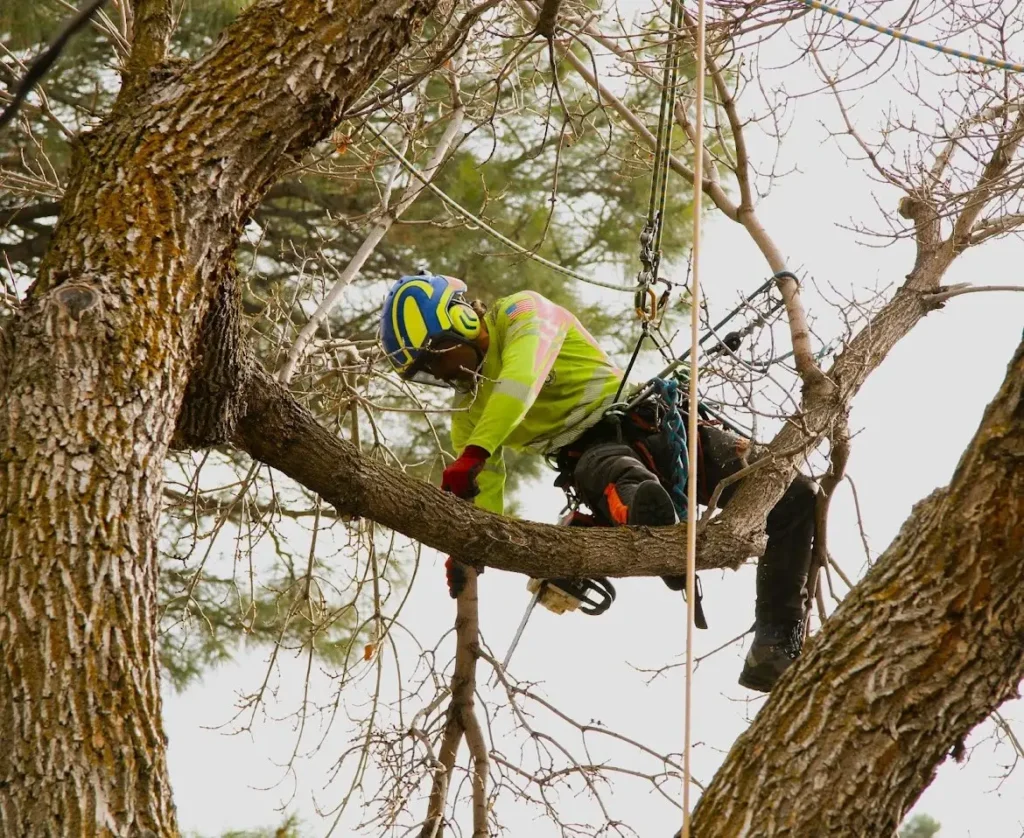
Whether you need a hazardous tree removed, branches trimmed before storm season, or an old stump ground down, hiring the right tree service in Clifton makes all the difference. Tree work involves heavy equipment, extreme heights, and large limbs that can cause serious damage if something goes wrong. The company you choose is responsible not only for your trees, but for the safety of your home, your property, and everyone nearby.
Unfortunately, not every tree company operates to the same standards. Some lack proper insurance, training, or equipment, and their mistakes can leave homeowners facing costly repairs or even legal liability.
The best way to protect yourself is to ask the right questions before you hire. In this guide, we’ll walk through the most important questions to ask a tree service or arborist, the red flags to watch for, and how to compare estimates so you can hire with confidence.
Why Choosing the Right Tree Service Matters
Tree care is not like mowing a lawn or cleaning gutters. It ranks among the most hazardous jobs in residential property work. A single misjudged cut can send a heavy limb through a roof, crush a fence, or injure a worker.
The right tree service protects you in several ways:
- Safety. Trained crews follow established safety standards and use proper rigging to control every piece that comes down.
- Property protection. Experienced professionals plan the work around your home, driveway, landscaping, and utility lines.
- Tree health. A qualified arborist knows how to prune correctly, so your trees stay healthy and strong for years to come.
- Financial protection. A properly insured company covers accidents, so you aren’t left paying for damage or injuries.
- Honest advice. A knowledgeable professional will tell you when a tree can be saved and when removal is truly necessary.
Questions to Ask Before Hiring a Tree Service in Clifton
1. Are You Insured, and Can You Provide Proof?
This is the single most important question to ask. A reputable tree service should carry at least two types of insurance:
- General liability insurance, which covers damage to your home, vehicles, or property during the job.
- Workers’ compensation insurance, which covers crew members if they’re injured on your property.
If a company doesn’t carry workers’ compensation and a worker is hurt in your yard, you could potentially face liability. Ask for a current certificate of insurance, and for added peace of mind, call the insurance provider to confirm the policy is active.
2. Do You Have the Proper Licenses?
Ask whether the company holds any business licenses required by the state, county, or locality where the work will take place. A legitimate business should be able to answer this clearly and provide documentation. Licensing shows that the company operates as an established business rather than a temporary or informal operation.
3. Do You Have ISA Certified Arborists on Staff?
The International Society of Arboriculture (ISA) offers the Certified Arborist credential to tree care professionals who pass a comprehensive exam and maintain their knowledge through continuing education. ISA Certified Arborists are trained in tree biology, pruning, diagnosis, risk assessment, and safe work practices.
Not every tree worker needs to be certified, but a certified arborist should be involved in assessing your trees and planning the work. You can ask for the arborist’s name and certification number and verify the credential through the ISA website.
4. Are You Accredited by a Professional Organization?
Membership or accreditation with a professional organization shows a company’s commitment to industry standards. The Tree Care Industry Association (TCIA) offers an accreditation program that reviews a company’s safety practices, business ethics, customer service, and professional standards. Accreditation is a strong sign that a company takes its work seriously.
5. How Long Have You Been in Business?
Experience matters in tree care. A company that has served the community for many years has a track record you can review and a reputation to protect. Long-standing local businesses are also more likely to be around if you need follow-up service or have questions after the job is done.
Ask how long the company has worked in Clifton and Northern Virginia specifically. Local experience means familiarity with common tree species, regional weather patterns, and local regulations.
6. Can You Provide References or Reviews?
Ask for references from recent customers with similar projects, and read online reviews on Google and other platforms. Look for consistent comments about professionalism, communication, cleanup, and whether the crew did what they promised.
Pay attention to how the company responds to negative feedback. A thoughtful, professional response is often a good sign.
7. What Safety Practices and Equipment Do You Use?
Professional tree services follow industry safety standards, such as ANSI Z133 for tree care operations. Ask how the crew will handle the job safely, especially if the tree is large, damaged, or close to your home.
Good questions include:
- Will the crew wear proper safety gear, such as helmets, eye protection, and chainsaw-resistant clothing?
- How will large limbs be lowered? Will you use rigging, a bucket truck, or a crane?
- How will you work safely near power lines?
A professional company should be able to explain its approach clearly and confidently.
8. How Will You Protect My Property?
Tree work can be hard on a yard. Heavy equipment can rut a lawn, and falling debris can damage gardens, fences, and hardscaping. Ask how the crew plans to protect your property during the job.
Experienced companies may use ground mats, rigging systems, and careful planning to minimize impact. They should also explain what happens if something is accidentally damaged.
9. What Is Included in Your Estimate?
Always request a detailed, written estimate. A vague quote can lead to misunderstandings or surprise charges later. Make sure the estimate clearly states:
- Which trees will be removed or trimmed, and the specific work to be done
- Whether stump grinding or stump removal is included
- Whether logs and wood will be hauled away or left on site
- What cleanup is included, such as chipping branches and raking debris
- The expected timeline for the work
Comparing detailed estimates side by side makes it much easier to see what each company is actually offering.
10. How Do You Prune Trees?
How a company prunes reveals a lot about its knowledge. Professional arborists follow ANSI A300 standards for tree care, which emphasize proper cuts that support healthy healing and growth.
Be cautious if a company recommends topping, which means cutting large branches back to stubs to reduce a tree’s height. Topping is widely considered harmful. It stresses the tree, invites decay, and often leads to weak, fast-growing sprouts that can become hazardous. A qualified arborist will recommend better alternatives, such as crown reduction or selective thinning.
11. Are There Alternatives to Removal?
A trustworthy arborist won’t automatically recommend removal. Depending on the tree’s condition, options like pruning, cabling and bracing, soil care, or pest treatment may help preserve a valuable tree.
Ask the arborist to explain why they’re recommending a particular approach. When removal is necessary, they should be able to tell you exactly why, whether due to decay, structural failure, root damage, or the tree’s proximity to your home.
12. Do You Handle Permits and Utility Locating?
Some tree work may require permits, especially for large trees, trees in protected areas, or properties governed by an HOA. Ask whether the company is familiar with local requirements and whether it can help with any necessary paperwork.
If stump grinding or digging is involved, ask whether the company will arrange to have underground utilities marked through Virginia 811 before work begins. Hitting a buried gas, electric, or water line can be dangerous and expensive.
Red Flags to Watch Out For
Knowing what to avoid is just as important as knowing what to ask. Be cautious of a tree service that:
- Can’t provide proof of insurance, or offers only a verbal assurance
- Knocks on your door after a storm offering an immediate deal, especially if they aren’t local
- Demands full payment or a large cash deposit upfront before any work begins
- Pressures you to decide right away, often by claiming the tree is about to fall
- Recommends topping your trees
- Uses climbing spikes on trees being pruned, which can wound healthy trees (spikes are generally only appropriate for removals)
- Gives a vague verbal quote without a written estimate
- Offers a price far below other estimates, which may mean cutting corners on insurance, safety, or cleanup
- Has no physical business address, website, or verifiable reviews
After major storms, unqualified operators often appear in neighborhoods looking for quick work. Even in an emergency, take a few minutes to verify insurance and credentials before letting anyone start.
How to Compare Tree Service Estimates
Getting more than one estimate is a smart move, especially for larger projects. To compare them fairly:
- Make sure each estimate covers the same scope of work. One quote may include stump grinding and full cleanup while another does not.
- Look at the recommended approach. Different companies may suggest different methods or equipment. Ask each to explain their reasoning.
- Confirm insurance and credentials for every company. The lowest quote isn’t a bargain if the company isn’t properly insured.
- Consider experience and reputation. Reviews, references, and years in business all reflect the quality you can expect.
- Evaluate communication. A company that answers your questions clearly and promptly during the estimate process is more likely to communicate well during the job.
The best choice is the company that offers the right combination of safety, expertise, clear communication, and value, not simply the lowest number.
What to Expect From a Professional Tree Service
When you hire a qualified tree service, the process should feel organized and transparent from start to finish:
- Initial contact. You describe your concerns and schedule an on-site visit.
- On-site assessment. An arborist inspects your trees, the surrounding area, and any potential hazards.
- Recommendations. You receive clear options, with explanations of why each is recommended.
- Written estimate. The scope of work, cleanup, and any additional services are outlined in writing.
- Scheduling. The company sets a date and explains how to prepare your property.
- The work. The crew arrives on time, works safely, and protects your property throughout the job.
- Cleanup and walkthrough. Debris is removed as agreed, and the crew makes sure you’re satisfied before leaving.
Why Clifton Homeowners Choose United Tree Services
United Tree Services has been helping Clifton homeowners care for their trees since 2010. We know that inviting a tree crew onto your property is a big decision, and we work hard to earn your trust at every step.
Here’s what you can expect when you work with us:
- ISA Certified Arborists who assess your trees and supervise the technical aspects of every job
- TCIA accreditation, reflecting our commitment to safety and professional standards
- Licensed, bonded, and insured for your complete peace of mind
- Honest recommendations, including alternatives to removal when a tree can be saved
- Detailed, transparent estimates with no hidden fees
- Careful property protection and thorough cleanup on every project
- 24/7 emergency response when storms or tree failures put your property at risk
- Owners directly involved in daily operations, bringing more than 15 years of experience
About United Tree Services
United Tree Services is a locally owned and operated tree care company serving Clifton, VA since 2010. With more than 15 years of professional tree care experience, our team includes ISA Certified Arborists, and we are TCIA accredited, licensed, bonded, and insured.
We provide tree removal, tree trimming, tree pruning, stump grinding, stump removal, tree cabling, tree maintenance, land clearing, and 24/7 emergency tree service for homeowners, businesses, HOAs, and municipal properties throughout Clifton and nearby communities, including Clifton Hunt, Union Mill Estates, Little Rocky Run, Fairfax Station, and Compton Ridge.
Schedule a Free Tree Assessment in Clifton
Looking for a tree service you can trust? Contact United Tree Services to schedule a free property assessment. Ask us any of the questions in this guide. We’re happy to show you our credentials, explain our process, and help you find the right solution for your trees and property.